

Introduction
The Margaret Thatcher coin is an interesting piece of British political and numismatic history. It celebrates the life and legacy of one of the most influential political figures in modern British history. Known as the Iron Lady, Margaret Thatcher became Britain’s first female Prime Minister in 1979 and remained in office until 1990. Her leadership changed the country’s political, economic and social landscape, making her an important figure in British history.
For coin collectors, items featuring her portrait offer more than an attractive design. They represent an important period in the United Kingdom’s past. Whether you have discovered one in an old collection, inherited it from a family member, or are thinking about purchasing one, understanding its background can make it even more interesting.
But is it a genuine circulating British coin? How much could it be worth? Are there different versions, and what makes them collectible?
Let’s explore the history, designs, varieties, estimated market value and collecting importance of these commemorative pieces.
1. Who Was Margaret Thatcher?
Margaret Thatcher was born on October 13, 1925, in Grantham, Lincolnshire, England. Her birth name was Margaret Hilda Roberts. She grew up in a family that valued hard work, education and personal responsibility.
Before entering politics, she studied chemistry at the University of Oxford. She later trained as a barrister while developing her political career. In 1959, she became a Member of Parliament for Finchley, beginning a journey that would eventually make her one of the most recognised political leaders in the world.
In 1975, Thatcher became leader of the Conservative Party. Four years later, she won the general election and became Britain’s first female Prime Minister.
Why Was She Called the Iron Lady?
The nickname Iron Lady reflected her strong political personality, firm leadership style and determination. She became known internationally for her direct communication and willingness to make difficult political decisions.
Her government introduced major economic reforms, including privatisation, changes to trade union laws and policies supporting private enterprise. Her leadership also played a significant role during the Cold War and the Falklands War.
Thatcher left office in November 1990. She died on April 8, 2013, at the age of 87.
Her historical importance explains why commemorative medals and coins bearing her portrait attract attention from collectors.
2. What Is the Margaret Thatcher Coin?
The expression Margaret Thatcher coin can refer to several different commemorative objects produced to recognise her political career and historical influence.
It is important to understand that not every item described as a coin is ordinary British currency.
Some examples are officially issued commemorative coins from British Overseas Territories, while others are privately produced medals or commemorative tokens.
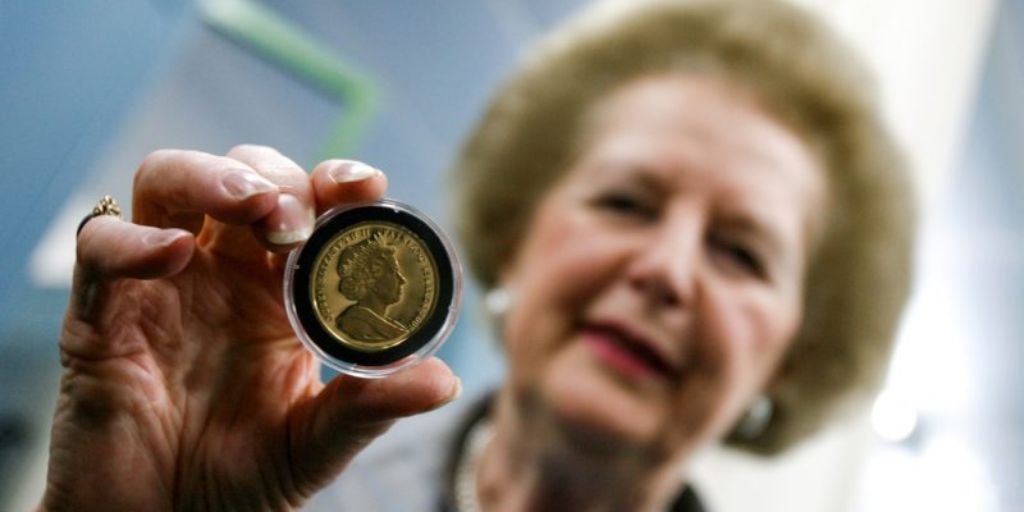
One notable example is the 2013 Falkland Islands one-crown coin, issued following her death. It features her portrait and commemorates her connection with the Falklands conflict.
Another interesting example is a 1979 commemorative medal celebrating her appointment as Britain’s first female Prime Minister.
These items are different in their dates, designs, materials and legal status.
Why Does This Difference Matter?
Imagine finding two old coins with the same person’s portrait. At first glance, they might look almost identical. However, one could be an officially issued commemorative coin, while the other could be a privately manufactured medal.
That difference can affect its historical classification, collector demand and market price.
Before purchasing or selling an example, it is always worth identifying the exact issue.
3. The 1979 Margaret Thatcher Commemorative Medal
One of the interesting historical pieces associated with Thatcher dates back to 1979, the year she became Prime Minister.
This commemorative medal celebrated her historic appointment and the beginning of a new chapter in British political history.
The medal is associated with the inscription:
THE RT. HON. MARGARET THATCHER M.P. 1979
Its reverse features the Palace of Westminster, accompanied by the inscription:
BRITAIN’S FIRST LADY PRIME MINISTER MAY 1979
These details make the piece particularly interesting because they connect its design directly to the historical event.
Physical Features
A documented nickel-bronze example has the following specifications:
- Year: 1979
- Composition: Nickel bronze
- Weight: Approximately 38 grams
- Diameter: Approximately 45 millimetres
- Shape: Round
- Mint attribution: Heaton and Sons, Birmingham
- Theme: Britain’s first female Prime Minister
A silver-gilt example of a similar commemorative design has also appeared in auction records.
It is important not to assume that every example has identical specifications. Different finishes and versions may exist.
Historical Importance
The medal captures an important moment in British politics. In 1979, women had already made important contributions to public life, but Thatcher’s election represented a major milestone in the country’s political leadership.
For collectors interested in political history, this makes the medal more than a decorative object. It is a small historical record of a major event.
4. The 2013 Falkland Islands One-Crown Coin
Another notable Thatcher-related collectible is the one-crown coin issued by the Falkland Islands in 2013.
The issue commemorated her death and recognised her connection with the islands during the 1982 Falklands War.
Main Coin Specifications
The documented 2013 issue has these characteristics:
- Issuing territory: Falkland Islands
- Denomination: One crown
- Year: 2013
- Composition: Copper-nickel
- Weight: Approximately 28.28 grams
- Diameter: Approximately 38.6 millimetres
- Shape: Round
- Mint: Pobjoy Mint
Obverse Design
The obverse features Queen Elizabeth II facing right. The surrounding inscription identifies the monarch and the Falkland Islands, together with the year 2013.
Reverse Design
The reverse features a portrait of Margaret Thatcher.
The design includes the dates 1925 and 2013, representing her birth and death years. It also displays the denomination ONE CROWN.
This combination of historical dates and portraiture makes the coin easy to connect with its commemorative purpose.
Why Was This Coin Issued?
The Falklands War was one of the most important events of Thatcher’s premiership. In 1982, Argentine forces invaded the Falkland Islands, and the British government sent a military task force to regain control.
The conflict ended with the surrender of Argentine forces in June 1982.
Thatcher’s response to the invasion became a defining part of her political legacy. The 2013 commemorative issue therefore recognises a historical relationship between the former Prime Minister and the islands.
5. Design and Symbols on These Collectibles
The design of a commemorative coin or medal is important because it communicates a historical story without requiring a long written explanation.
Thatcher-related issues use portraits, inscriptions, dates and national symbols to represent different aspects of her life.
Portrait of Margaret Thatcher
Her portrait is the central feature of several commemorative designs. Portraits help identify the person being honoured and give the item a direct connection to its historical subject.
The Palace of Westminster
The 1979 medal uses the Palace of Westminster as its reverse design. This building is closely associated with British parliamentary democracy and political leadership.
Its inclusion connects the medal with the institution in which Thatcher served.
Historical Dates
The dates 1925 and 2013 on the Falkland Islands issue represent the beginning and end of Thatcher’s life.
These dates give the design a memorial purpose.
Inscriptions and Denominations
Written inscriptions help establish the commemorative subject, issuing territory and denomination.
They are also useful for identification. Collectors should examine the lettering carefully because inscriptions can help distinguish one version from another.
6. How Much Is a Margaret Thatcher Coin Worth?
One of the most common questions among collectors is how much these items are worth.
The answer depends on the exact issue. There is no single market price for every Thatcher-related coin or medal.
A 1979 nickel-bronze medal, a silver-gilt commemorative medal and a 2013 copper-nickel crown are different collectibles. They should not automatically be valued in the same way.
Factors That Influence Value
Several important factors determine the market value.
1. Condition
Condition is one of the most important considerations. An item with clear details, attractive surfaces and minimal wear may attract more interest than a heavily damaged example.
Collectors commonly use descriptions such as Fine, Very Fine, Extremely Fine and Uncirculated.
2. Metal Composition
The metal used in production can influence value. Gold and silver pieces may have an additional precious-metal value, while copper-nickel and nickel-bronze examples are generally valued primarily as collectibles.
However, metal content alone does not determine the final selling price.
3. Rarity
Limited production, low survival numbers and collector demand can make an item more desirable.
A commemorative piece that is difficult to find may attract stronger interest than a widely available example.
4. Original Packaging
Boxes, certificates and original presentation materials can improve the appeal of some commemorative issues.
They may also help establish authenticity and identify the exact version.
5. Historical Interest
The historical importance of the subject can influence demand. Margaret Thatcher remains a widely discussed political figure, and collectors interested in British history may find her commemorative pieces particularly appealing.
An Example of an Auction Result
A silver-gilt Margaret Thatcher commemorative medallion was included in a Tennants auction on February 16, 2022. The lot sold for £50, although it was grouped with other coins and collectibles.
This result provides a historical auction reference, not a guaranteed standalone value for every similar medal.
A proper valuation requires examination of the individual item, its metal, condition and authenticity.
7. Is the Margaret Thatcher Coin Rare?
Rarity is an important subject in coin collecting. However, a coin featuring a famous person is not automatically rare or valuable.
The rarity of a Thatcher commemorative piece depends on its production numbers, availability, condition and demand among collectors.
The 1979 medal and the 2013 Falkland Islands crown are particularly interesting because they represent two different historical moments.
What Makes an Example Rare?
- Limited production: An issue with a restricted number of examples may attract additional attention.
- Survival rate: Some older medals may have been lost, damaged or discarded over time.
- Special finishes: Silver, gold-plated or proof-finish versions may appeal to particular collectors.
- Collector demand: Interest can increase when a historical personality receives renewed public attention.
- Authenticity: Genuine examples with reliable documentation are generally more desirable.
The 2013 Falkland Islands crown is a recognised commemorative issue, but its collector rarity should not be confused with proof of an exceptionally high market value.
A sensible collector always checks the exact issue before describing an item as rare.
8. How to Identify an Authentic Collectible
If you have found an old Thatcher coin or medal, identifying it correctly should be your first step.
You do not need to be an expert to begin. A careful examination of the design and physical characteristics can provide useful information.
Check the Date
Look for dates such as 1979 or 2013. These can help distinguish the historic Prime Minister medal from the later Falkland Islands commemorative coin.
Examine the Portrait
Compare the portrait with documented examples of the particular issue. Pay attention to the facial features, lettering and overall quality of the design.
Check the Inscriptions
Read the words around both sides. The 1979 medal includes references to Thatcher’s appointment as Britain’s first female Prime Minister, while the 2013 crown identifies the Falkland Islands and its denomination.
Measure the Item
Diameter and weight can help distinguish different versions. For example, the documented 2013 one-crown issue measures approximately 38.6 millimetres across.
Look at the Material
Different metals and finishes can indicate different production versions. If a piece is advertised as gold or silver, do not rely only on its colour. Professional testing may be necessary.
Seek Professional Authentication
For an expensive or unusual example, consider asking a reputable coin dealer or professional numismatic specialist to examine it.
Remember, a convincing appearance is not sufficient proof of authenticity.
9. Where Can You Buy or Sell These Collectibles?
Collectors can encounter Margaret Thatcher commemorative items through several types of sellers.
The best option depends on whether you want a historical medal, an official commemorative coin or a precious-metal version.
Coin Dealers
Specialist coin dealers can help identify different issues and explain their condition. They may also offer opportunities to purchase or sell collectible pieces.
Coin Auctions
Auction houses are useful for researching previous sales and finding unusual historical items. Their catalogues often provide information about the composition, weight, dimensions and condition of individual lots.
Online Collecting Marketplaces
Online marketplaces can offer a wide range of historical coins and medals. However, buyers should examine photographs carefully and check seller feedback before making a purchase.
Coin Collecting Communities
Numismatic communities can help beginners understand unfamiliar pieces. Experienced collectors may recognise particular designs or point out differences between genuine and imitation examples.
Important Buying Advice
Before spending money, ask the seller for clear photographs of both sides, measurements, metal details and any available certificates.
Do not assume that an expensive asking price represents the actual market value. A completed auction sale is generally more useful evidence than an unsold listing.
10. Why Margaret Thatcher Collectibles Matter to History
A commemorative coin or medal can preserve a historical event in a surprisingly small space.
The Thatcher issues are interesting because they connect coin collecting with British politics, women’s history and international relations.
A Milestone for Women in Politics
Thatcher’s appointment as Britain’s first female Prime Minister was an important moment in the country’s political history.
Her career remains relevant to discussions about women’s representation and leadership.
A Connection to the Falklands War
The 2013 Falkland Islands crown connects her memory with the 1982 conflict. This gives the piece a particular historical significance for people interested in the relationship between Britain and the islands.
A Record of Changing Political History
The 1979 medal and 2013 crown were produced decades apart. Together, they demonstrate how commemorative objects can reflect changing public attitudes and historical memories.
A Personal Connection for Collectors
Some people collect these items because they remember Thatcher’s time in office. Others are interested in British political history, while some simply appreciate the craftsmanship of historical medals.
Like pages in a history book, these small objects allow collectors to explore events from different generations.
11. Tips for Preserving and Collecting Thatcher Commemorative Pieces
Proper storage is essential if you want to maintain the appearance and condition of a historical collectible.
Even a genuine and attractive medal can lose some of its appeal if it is scratched, cleaned incorrectly or stored in an unsuitable environment.
Avoid Cleaning the Surface
Never use household cleaners, abrasive materials or metal polish on a collectible coin without professional advice. Cleaning can permanently damage its original surface and reduce collector interest.
Use Suitable Storage
Keep the item in a suitable coin holder, protective capsule or archival-quality storage material.
Avoid containers that may contain harmful chemicals.
Control Moisture
Store collectibles in a dry environment. Excessive moisture can contribute to corrosion, staining or surface damage.
Handle Carefully
Hold the item by its edges whenever possible. This reduces the chance of leaving fingerprints on the main surfaces.
Keep Documentation
If your collectible comes with a certificate, original box or purchase receipt, preserve these materials.
They can help future buyers understand its background and identify the correct issue.
Build a Focused Collection
New collectors do not need to purchase every available commemorative piece. You could begin with British political medals and gradually expand into historical crowns, royal commemoratives and other related issues.
A carefully selected collection can be more rewarding than purchasing items without understanding their history.
12. The Lasting Legacy of Margaret Thatcher in Coin Collecting
Margaret Thatcher’s influence extended far beyond the years she spent at 10 Downing Street. Her political decisions, leadership style and historical achievements continue to attract discussion.
Commemorative coins and medals provide a different way to explore that legacy.
The 1979 medal celebrates her historic appointment as Prime Minister, while the 2013 Falkland Islands crown remembers her connection with the islands and the events of 1982.
These pieces are not simply decorative objects. They represent different chapters of a complicated and influential political life.
For collectors, their appeal comes from a combination of historical background, portrait design, material, condition and availability.
Whether you are an experienced numismatist or someone who has recently discovered an interesting old medal, learning about the exact issue is the best way to appreciate it.
Conclusion
The Margaret Thatcher commemorative coin and medal issues offer an interesting connection between British political history and coin collecting. From the historic 1979 medal celebrating Britain’s first female Prime Minister to the 2013 Falkland Islands one-crown issue, each piece tells a different story.
Their value depends on authenticity, condition, metal composition, rarity and collector demand. Not every example is exceptionally valuable, but each can hold historical and personal significance.
If you own one, take time to identify its exact design and specifications before buying or selling it. Understanding its story is the first step towards appreciating its true collecting importance.
Frequently Asked Questions (FAQs)
1. Is there an official Margaret Thatcher coin?
Yes. The Falkland Islands issued a commemorative one-crown coin in 2013 featuring Margaret Thatcher. Other Thatcher-related collectibles include commemorative medals and issues from other territories.
2. How much is a Margaret Thatcher coin worth?
Its value depends on the exact issue, metal, condition, authenticity and market demand. A silver-gilt commemorative medallion appeared in a 2022 auction lot that sold for £50, but this was a mixed lot rather than a standalone valuation.
3. What year was the Margaret Thatcher commemorative coin released?
One notable commemorative coin was released in 2013 by the Falkland Islands to mark her death. A separate medal celebrating her appointment as Prime Minister dates from 1979.
4. Is the 2013 Margaret Thatcher coin made of silver?
The documented Falkland Islands one-crown issue is made of copper-nickel, not silver. Other commemorative items may have different metal compositions, so identification is important.
5. Is a Margaret Thatcher coin a good investment?
It can be an interesting addition to a historical coin collection, but future price increases are not guaranteed. Buyers should research previous sales, verify authenticity and consider the item’s condition before investing.
